Impacts of AirBnB regulation in New York
New York has long been a money spinner for AirBnB. In January 2023 there were 38,500 listings. As…



New York has long been a money spinner for AirBnB. In January 2023 there were 38,500 listings. As…
In 2010 the Commonwealth Association of Planners held its first Student Essay competition. The winners were Jeremiah Atho…
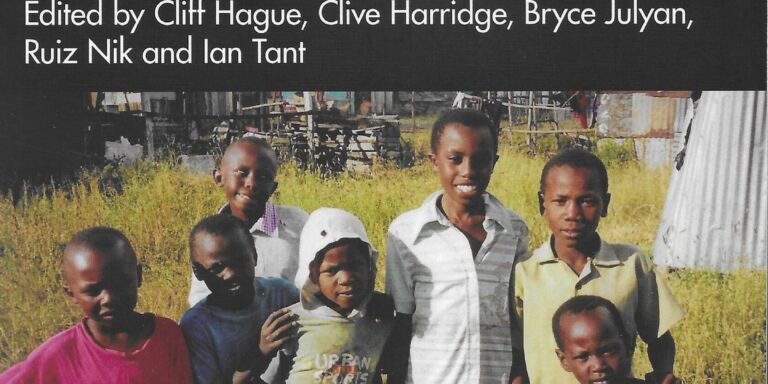
Ken Loach’s film, Kes, was released in 1969. What does it tell us about life in a coalfield…


Cliff is a freelance consultant, researcher, author and trainer. He was the Chair of the Cockburn Association 2016 – 2023.
He is Professor Emeritus of Planning and Spatial Development at Heriot-Watt University in Edinburgh.
He is a Past President of the Royal Town Planning Institute, and of the Commonwealth Association of Planners.
He is a past Chair of Built Environment Forum Scotland.
He was awarded the O.B.E. in the 2016 Birthday Honours.
Resilience of cities is the theme of the latest issue of the French publication of Villes en Développement edited by my old friend Marcel Belliot. As the preface notes, resilience is now central to “approaches and strategies of governments partnering urban development and of funders.” It brings a holistic and interdisciplinary approach to understanding and managing urban development.…
This blog was first posted in August 2014. If you are 30 years old, then 260 million people have moved from rural China into its cities during your life time. This amounts to more than half of the current EU population. 117M moved in the decade between 2000 and 2010. Environmental pollution in many of…

In November 2016 I visited Luanda, Angola’s capital, to deliver workshops on sustainable development and urban planning. I was able to gain a first hand experience of the dramatic and controversial changes in the city, which I recorded in this blog. At something over 5 million people, Luanda is now one of Africa’s major metropolitan…
Recently Professor Cliff Hague from Scotland went to a meeting of a project looking at small and medium-sized towns across Europe,where he spoke in a small town about branding the town. For ICN he reviews his visit and shares his thoughts with us. 2013-12-11 The ESPON project TOWN is looking at small and medium sized towns across…
I have referred to Chinese urbanisation several times in these blogs, but make no apologies for returning to the topic. What is happening in China should be of interest to planners, urbanists, environmentalists and economic development professionals everywhere. In part this is because of the sheer scale of the changes – a rural to urban…
City planning in the Palestinian-controlled areas has yielded poor results when it comes to unexpected challenges, including the recent outbreak of COVID-19, the novel coronavirus, says local expert Dr. Ahmad El-Atrash. In this Guest Blog, Dr. Ahmad El-Atrash (pictured above) from the UN-Habitat office in Ramallah, reflects on the situation in Palestine. Palestinian cities and communities…
In the early 1990s Yugoslavia began to disintegrate, triggering a series of vicious wars as ethnic groups contested territories. I have been doing some work looking at current development in the countries of the Western Balkans. Although conditions have certainly improved over the past decade, and the World Bank now rates them as “upper middle…
Walking the streets of Dublin, you are never far from the brash excesses of the Celtic Tiger era – or from the havoc that the banking crisis has brought. Just as remarkable is the spirit that seems to have sustained the city, and not least the planners in their attempts to build a recovery. Where…
This blog was first posted in February 2018. The exhibition at the Ninth World Urban Forum highlights the Asian embrace of Smart Cities. This is my fourth World Urban Forum, and, as ever, the exhibition is worth visiting. Most of the booths are taken by national governments, some by cities or local government organisations, a…
This blog was first posted in February 2015. Young Eyes is a new IC project. It looks to me like it will be a good one. I was at the kick-off meeting in a cold and misty Warsaw in January. All the partners were there – Jelgava and Rauna from Latvia, our Polish friends from…