Impacts of AirBnB regulation in New York
New York has long been a money spinner for AirBnB. In January 2023 there were 38,500 listings. As…



New York has long been a money spinner for AirBnB. In January 2023 there were 38,500 listings. As…
In 2010 the Commonwealth Association of Planners held its first Student Essay competition. The winners were Jeremiah Atho…
Ken Loach’s film, Kes, was released in 1969. What does it tell us about life in a coalfield…



Cliff is a freelance consultant, researcher, author and trainer. He was the Chair of the Cockburn Association 2016 – 2023.
He is Professor Emeritus of Planning and Spatial Development at Heriot-Watt University in Edinburgh.
He is a Past President of the Royal Town Planning Institute, and of the Commonwealth Association of Planners.
He is a past Chair of Built Environment Forum Scotland.
He was awarded the O.B.E. in the 2016 Birthday Honours.
What kind of regional development actions might boost competitiveness and growth through forging new links with states around the borders of the European Union (EU)? This is the question that will be the focus of a meeting in Cyprus that I am participating in this week. The EU’s European Neighbourhood Policy dates from 2004. Its objective is to avoid…


The film Force Majeure focuses on the tensions within a marriage, but it also depicts the tensions between people and the natural environment. The original Swedish title of Ruben Östlund’s internationally acclaimed film Force Majeure is Turist, which is “Tourist”. The pivotal drama in the film is the moment early on when an avalanche of snow threatens to bury the winter…
This is my third blog from the 10th World Urban Forum in Abu Dhabi in February 2020. Today has not been a disaster! Far from it, there have been some really good stories to hear at the World Urban Forum. But I want to put the theme of disasters at the heart of this blog.…
This blog was first posted on the Planning Resource website on 17 July 2012. The next generation is going to witness a staggering amount of new urban development as the world’s economic centre of gravity shifts towards Asia. Cities in both developed and rapidly urbanising countries need professional planning if they are to prosper. Companies…
Metropolitan growth receives less attention than it deserves. The spread of metropolitan regions is one of the defining features of the age, yet as most of it is taking place in the developing world it goes largely unremarked by Western planners and urbanists. Of course, we have our own metropolitan regions that are deeply problematic…
This blog was first posted on the Planning Resource website on 13 February 2012. Last week’s forced departure of the President of The Maldives has brought global attention to this small country. It is one of 29 small island developing states (SIDS) listed by the UN Commission on Trade and Development, though there is no official…
This item was first published in July 2019. Why is the French Government failing to meet its own goals on limiting CO2 emissions? A blog by Pierre Calame provides insights into why France is not meeting its targets on energy and the climate emergency. The messages apply to many other countries too. Calame points out that successive…
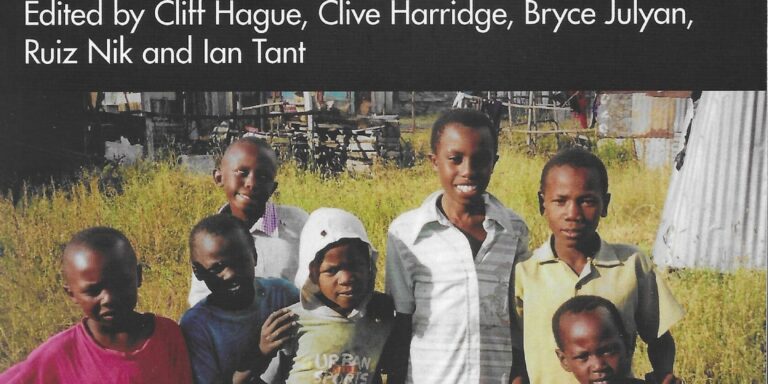
Ruthless developers are literally undermining a Kenyan school in an attempt to capture the rights to valuable land, alleges a priest with wide experience of the country. Most new development in Kenya is informal. Land piracy has long been a significant factor in urban development. Schools have become especially vulnerable, so much so that in…
In 2013 I helped RTPI construct a timeline to tell the story of planning 1914-2014 for their centenary year. Inevitably the focus was on the Institute itself and events in the UK. However, it set me wondering what a “World View” of planning over that 100 years might look like? If you had to nominate…