Impacts of AirBnB regulation in New York
New York has long been a money spinner for AirBnB. In January 2023 there were 38,500 listings. As…



New York has long been a money spinner for AirBnB. In January 2023 there were 38,500 listings. As…
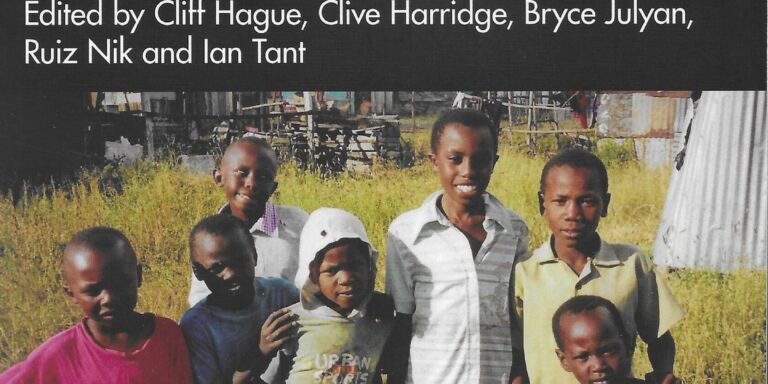
In 2010 the Commonwealth Association of Planners held its first Student Essay competition. The winners were Jeremiah Atho…
Ken Loach’s film, Kes, was released in 1969. What does it tell us about life in a coalfield…



Cliff is a freelance consultant, researcher, author and trainer. He was the Chair of the Cockburn Association 2016 – 2023.
He is Professor Emeritus of Planning and Spatial Development at Heriot-Watt University in Edinburgh.
He is a Past President of the Royal Town Planning Institute, and of the Commonwealth Association of Planners.
He is a past Chair of Built Environment Forum Scotland.
He was awarded the O.B.E. in the 2016 Birthday Honours.
This blog was first posted on the Planning Resource website on 28 January 2012. I went to the cinema last night to watch a new film from China. I recommend “Mr Tree” as a film that gives you a flavour of the great transition that China is going through as people move to the cities. It shows…
This blog was first posted on the Planning Resource website on 24 October 2011. The idea of polycentric development has been a cornerstone of European spatial planning for over a decade. But what does it mean? What does it imply for practice? How can we measure it? Is it now past its “sell-by date”? The…
This item was first posted in October 2019. Pakistan is suffering from chronic underinvestment in urban planning. The leading newspaper in the Punjab has run a story about unfilled professional planning posts, noting some of the negative consequences. The article in Dawn, states that “Many professionals working in the public and private sectors have either left…
Territorial insight: Where to focus what types of investments: ESPON Results by early 2013, Second ESPON 2013 Synthesis Report (2013) https://www.espon.eu/topics-policy/publications/synthesis-reports/second-espon-2013-synthesis-report Co-author.
Posted September 22, 2014 by cliffhague & filed Share The last week here in UK has been dominated by the referendum on Scottish independence. Although the “No” side won by a clear margin (55/45%) the issues behind the referendum have not disappeared, and now there is a political discussion at Westminster about devolution across the UK. Meanwhile, last Wednesday I…
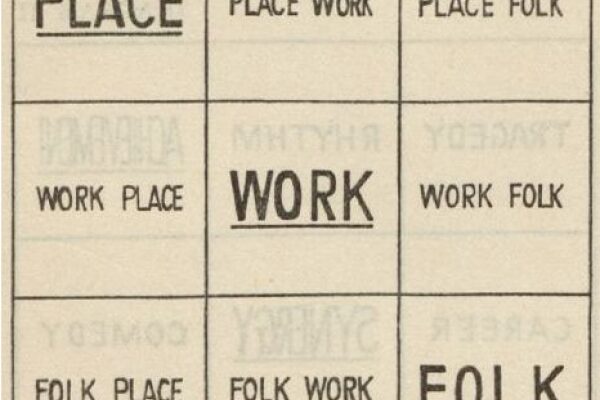
It is doubtful if the Italian film-maker Frederico Fellini knew of the work of the Scottish luminary Patrick Geddes – biologist, ecologist, sociologist, educationalist and planner. Fellini’s films have a strong sense of place, and of the relationship between people and place, which was an important theme for Geddes. I want to explore one of…
A wide-ranging review of the research literature reveals that living in an environment with plentful greenery seems to be associated with a number of indicators of good health. The study reveals what the authors say is “fairly strong evidence” that there is a positive association between greenness and physical activity. As well as having phyical…
This blog was first posted in May 2016. The first issue of a new journal gives insights to new ways of thinking about cities. “Conscious Cities proposes a radical shift away from the last few decades’ prioritisation of efficiency over more people-centric considerations” argues Itai Palti in his editorial to the first issue of the journal…
This blog was first posted on the Planning Resource website on 11 July 2011. A third of the world’s people are on the move, says Billy Cobbett, the Manager of Cities Alliance. Addressing the World Planning Schools Congress in Perth, Western Australia, Mr. Cobbett called for planners to transform the current wave of urbanisation into a sustainable…

This is my third blog from the 10th World Urban Forum in Abu Dhabi in February 2020. Today has not been a disaster! Far from it, there have been some really good stories to hear at the World Urban Forum. But I want to put the theme of disasters at the heart of this blog.…