Impacts of AirBnB regulation in New York
New York has long been a money spinner for AirBnB. In January 2023 there were 38,500 listings. As…



New York has long been a money spinner for AirBnB. In January 2023 there were 38,500 listings. As…
In 2010 the Commonwealth Association of Planners held its first Student Essay competition. The winners were Jeremiah Atho…
Ken Loach’s film, Kes, was released in 1969. What does it tell us about life in a coalfield…


Cliff is a freelance consultant, researcher, author and trainer. He was the Chair of the Cockburn Association 2016 – 2023.
He is Professor Emeritus of Planning and Spatial Development at Heriot-Watt University in Edinburgh.
He is a Past President of the Royal Town Planning Institute, and of the Commonwealth Association of Planners.
He is a past Chair of Built Environment Forum Scotland.
He was awarded the O.B.E. in the 2016 Birthday Honours.
Link to download for free
Link to buy
This blog was first published in October 2014,and is reproduced by kind permission of the editor of the Planning Resource website. Last week I was in Pakistan, speaking at an international conference on Town Planning and Urban Management. It was an opportunity to revisit Lahore for the first time in 20 years and to experience…
Recently Professor Cliff Hague from Scotland went to a meeting of a project looking at small and medium-sized towns across Europe,where he spoke in a small town about branding the town. For ICN he reviews his visit and shares his thoughts with us. 2013-12-11 The ESPON project TOWN is looking at small and medium sized towns across…
Local food networks are attracting increasing attention. This week I picked up Issue 1 of Nourish Scotland Magazine, which is produced by Scotland’s sustainable food network. Pete Richie, Director of Nourish Scotland, sums up the organisation’s basic vision. It is to “reimagine farming as a service: and a service which is increasingly co-produced by farmers and…
This blog was first posted on the Planning Resource website on 18 June 2012. What kind of strategies can help regions to strengthen their performance in knowledge and innovation? This was the theme of the ESPON Open Seminar that I took part in last week in Aalborg. What emerged was a strong consensus on the importance of…
This blog was published in March 2016. Civic pride and civic trust are important for community cohesion and well-being, but are being eroded by austerity and a centralised system of planning and local government. This was a central theme of the inaugural Scottish Civic Trust Annual Lecture which I delivered in Edinburgh on 2 March.…
Young people from Germany, Norway, Latvia, Poland, Russia and Scotland attended last week’s international youth summer school in Benmore, Scotland. The event was put on by Planning Aid for Scotland and by Innovation Circle. The theme was “Cities of Tomorrow”. I was asked to lead the introductory session. I started with a Powerpoint showing visions from 1913 and…
18 Past Presidents of the RTPI have signed a letter highlighting the findings of a recent report on planning in Area C of the West Bank. The letter says that the report “explains how planning is being used to block development and impede much needed infrastructure investment in Palestinian villages, while facilitating the construction of…
“I studied the laws surrounding Airbnb all over the world. None are perfect. ” David Wachsmuth. Laws are almost irrelevant if you do not have access to Airbnb data to implement them ” says David Wachsmuth. Associate Professor in Urban Planning, McGill University. Despite legislation seeking to limit and control online short-term rentals, Montreal has five…
This blog was first published on 27 February 2012, on the Innovation Circle Network site. Community Archaeology The Isle of Bute is situated off the west coast of Scotland. It is peripheral to the periphery, and has all the added problems that come with being an island. Unemployment is high, incomes are low, houses are…
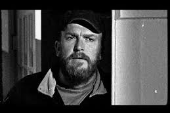
The British film Bait, released in 2019, should be of interest to planners and urbanists internationally for the issues it raises about community and economic development. Bait is set in a fishing village in Cornwall, one of the poorest regions in England. After 20 years of regional development funding from the EU, GDP per capita remains only 68% of…