Impacts of AirBnB regulation in New York
New York has long been a money spinner for AirBnB. In January 2023 there were 38,500 listings. As…



New York has long been a money spinner for AirBnB. In January 2023 there were 38,500 listings. As…
In 2010 the Commonwealth Association of Planners held its first Student Essay competition. The winners were Jeremiah Atho…
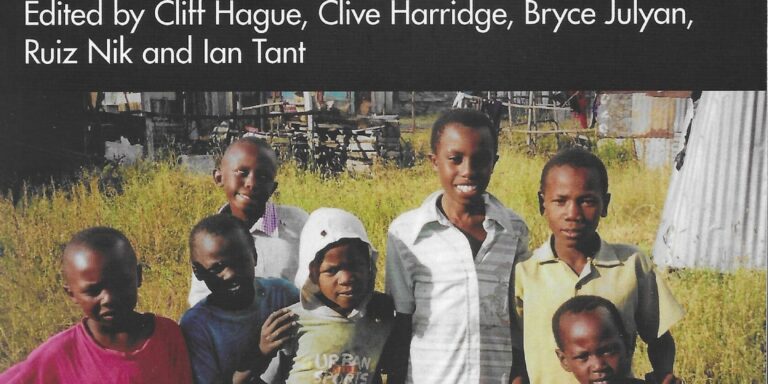
Ken Loach’s film, Kes, was released in 1969. What does it tell us about life in a coalfield…


Cliff is a freelance consultant, researcher, author and trainer. He was the Chair of the Cockburn Association 2016 – 2023.
He is Professor Emeritus of Planning and Spatial Development at Heriot-Watt University in Edinburgh.
He is a Past President of the Royal Town Planning Institute, and of the Commonwealth Association of Planners.
He is a past Chair of Built Environment Forum Scotland.
He was awarded the O.B.E. in the 2016 Birthday Honours.
Almost half of the children in New Delhi are suffering irreversible lung damage because of the toxic levels of air pollution in the city. A number of factors make children particularly vulnerable to air pollution. They have lower immunity than adults and their respirtory tracts are easier for pollutnants to penetrate. Also particulate matter is concentrated…
A new publication that can be downloaded for free sets guidelines for how to plan and manage metropolitan development. Unpacking Metropolitan Governance for Sustainable Development argues that new governance structures are needed in metropolitan areas. It looks at at how and why metropolitan regions work – or not – and how effective metropolitan governance can be…

The zero draft of the New Urban Agenda, the declaration that the governments of the world will sign up to in October 2016, gives a prominent role to more proactive and inclusive urban and regional planning. The draft document makes a ringing early statement: “We commit to a paradigm shift in the way we plan,…
Zlin is an outstanding example of a town inspired by 20th century functionalist architecture. This classic company town was a product of the Bata shoe company, its “home town” that the company then mimicked across the continents. It survived Communism, and now a finely balanced conflict is taking place between conservation and consumer capitalism. The…
Posted November 10, 2014 by cliffhague While in Philadelphia recently for the annual conference of the American Collegiate Schools of Planning I was able to make a trip to Atlantic City, New Jersey, a place famous for its use of casinos as a driver for urban regeneration. As well as walking the famous boardwalk on a rather drab end of…
This blog was first posted in July 2019. Urban Transformation and “New Style” Urbanisation in China was the theme of a major conference hosted by the University of Glasgow. In 2014 China launched its New-Style Urbanisation Plan (NUP). The Plan gave a new emphasis to environment and to the quality of urban development, and better…
This blog was first posted in February 2020. After the pomp of the opening ceremony, the 10th World Urban Forum got involved in two critical issues. How to plan and manage metropolitan areas? An event organised by ISOCARP focused on this urgent theme. A range of leading figures from organisations that included the World Bank,…
Walking the streets of Dublin, you are never far from the brash excesses of the Celtic Tiger era – or from the havoc that the banking crisis has brought. Just as remarkable is the spirit that seems to have sustained the city, and not least the planners in their attempts to build a recovery. Where…
Murmansk – a shrinking post-socialist city Shrinking cities are a focus of growing concern. Globalisation has increased the vulnerability of cities to sudden adverse changes in their economic base. Austerity policies augment the problems. Loss of a key economic activity, can be followed by net out-migration of economically active age groups, falling tax revenues, an…
This blog was first posted on the Planning Resource website on 15 May 2012. Natural disasters continue to claim lives and devastate families, particularly the global South. The poor are most vulnerable as they typically live in the most hazardous locations. However, this social and geographical reality also compounds the problems, because of the gaps…