Impacts of AirBnB regulation in New York
New York has long been a money spinner for AirBnB. In January 2023 there were 38,500 listings. As…



New York has long been a money spinner for AirBnB. In January 2023 there were 38,500 listings. As…
In 2010 the Commonwealth Association of Planners held its first Student Essay competition. The winners were Jeremiah Atho…
Ken Loach’s film, Kes, was released in 1969. What does it tell us about life in a coalfield…



Cliff is a freelance consultant, researcher, author and trainer. He was the Chair of the Cockburn Association 2016 – 2023.
He is Professor Emeritus of Planning and Spatial Development at Heriot-Watt University in Edinburgh.
He is a Past President of the Royal Town Planning Institute, and of the Commonwealth Association of Planners.
He is a past Chair of Built Environment Forum Scotland.
He was awarded the O.B.E. in the 2016 Birthday Honours.
Three contrasting films prompt important questions about the nature of communities, past and present, rural and urban. The word “community” is often invoked by planners and architects, but all too often with disregard for the realities. This week I have been to see three films that explore what communities are and how they function, while also…
This item was first published in 2015. Passion for strategic spatial planning has too rarely endured, thus undermining precisely what it needs, which is a long term perspective. So often startegic planning is disregarded or under-resourced, but used effectively it could provide a means of delivering inclusive and sustainable development. Therefore research by a practising…
ESPON 2013 is an applied research programme partly funded by the European Regional Development Fund and partly by the 28 EU member states, plus Iceland, Liechtenstein, Norway and Switzerland. Its research has built an evidence base to support policy development for territorial cohesion and development. ESPON appoints two experts to sit on the Sounding Board…

A chance to read my monthly Diary in Planning from June 1989, which starts in Berlin just months before the Berlin Wall came down. It also looks at the Adam Smith Institute’s ideas for privatising streets – an idea that might be revived post-Covid19? Of course there have been many gated communities developed in the meantime. This was…
Public spaces are integral to healthy and prosperous cities. This was the theme of a major conference last week in the run-up to next year’s Habitat III global summit. Place-making needs to be seen as contributing to the 2015-2030 Sustainable Development Goals. The Future of Places conference in Stockholm was the third and last in a series that has…
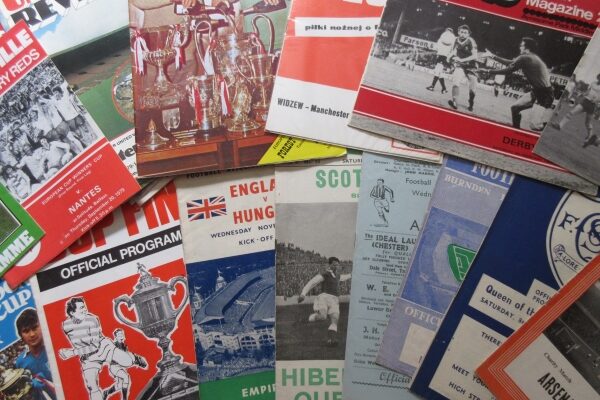
I have been busy with promoting my book ‘Programmes! Programmes! Football and Life from Wartime to Lockdown’. If you want to find out more here are some links. I did an event for the National Library of Scotland in conversation with my son, Prof.Euan Hague from DePaul University in Chicago. Including the Q&A, this runs for an…
Ideas for reviving flagging public markets as places to shop, eat and meet were presented by experts at an international conference in Barcelona this week. With many public markets struggling to adapt to changing patterns of shopping the need for design and innovation has never been stronger, and the answer lies in creating a sense…
Planning is being used in the Israeli-occupied West Bank of Palestine to deny Palestinian communites fair opportunities for development. The practices undertaken in the name of “good planning” actually amount to a denial of administrative justice. These are important findings from an International Advisory Board of experienced planners that it was my privilege to chair. …
The authorities in Rome this week demolished the Ponte Mammolo informal settlement where some people have lived permanently for well over a decade. Claims that residents were given advanced notice of the arrival of the bulldozsrs are disputed. The migrations from North Africa into Italy have seen some 200 new and transient people living on…
This Guest Blog was first posted in 2016. How might Brexit impact on the EU? Will the Netherlands be next? David Evers scratches the scabs. This Guest Blog is contributed by David Evers from the Netherlands Environmental Protection Agency. The views expressed are his own, and not those of the Agency or of ESPON, for…