Impacts of AirBnB regulation in New York
New York has long been a money spinner for AirBnB. In January 2023 there were 38,500 listings. As…



New York has long been a money spinner for AirBnB. In January 2023 there were 38,500 listings. As…
In 2010 the Commonwealth Association of Planners held its first Student Essay competition. The winners were Jeremiah Atho…
Ken Loach’s film, Kes, was released in 1969. What does it tell us about life in a coalfield…


Cliff is a freelance consultant, researcher, author and trainer. He was the Chair of the Cockburn Association 2016 – 2023.
He is Professor Emeritus of Planning and Spatial Development at Heriot-Watt University in Edinburgh.
He is a Past President of the Royal Town Planning Institute, and of the Commonwealth Association of Planners.
He is a past Chair of Built Environment Forum Scotland.
He was awarded the O.B.E. in the 2016 Birthday Honours.
This blog was first published in June 2016, the day after the Brexit referenedum. A Brexit-induced crash in the markets seems likely to set the framework for the work of planners in the months ahead. I am writing early on Monday afternoon, 27 June 2016. The Pound has fallen to a 31 year low; shares…
Whether it’s an old church or the shell of a derelict factory, a gap site or an under-used parking lot, vacant land and buildings are a headache for planners and regeneration professionals. The impacts of vacany stretch beyond the site, creating a sense of decline and blighting neighbourhoods. Yet these left overs can be the…
In 2013 I helped RTPI construct a timeline to tell the story of planning 1914-2014 for their centenary year. Inevitably the focus was on the Institute itself and events in the UK. However, it set me wondering what a “World View” of planning over that 100 years might look like? If you had to nominate…
Posted April 21, 2014 by cliffhagueShare I was in Botswana recently. Planning there is going through a significant transformation. New legislation that came into force in April 2014 will see significant devolution of planning powers to 16 District-level authorities. Twelve of these are rural. As planning goes local the challenge will be to deliver a more…
A project that has resettled slum dwellers and given them security of tenure is being hailed as a model to be followed in the Indian sub-continent. The number of slum dwellers in Bangldesh has been increasing sharply over the past 20 years. The urban slum population is 60%, a higher figure than for India or Pakistan.…
This blog was first posted on the Planning Resource website on 22 June 2011. Budapest What can local and regional authorities do to speed economic recovery? What kind of actions are needed to make the pattern of development more sustainable? How can we make places more inclusive? The Territorial Agenda of the European Union 2020 (TA), agreed…
A new publication that can be downloaded for free sets guidelines for how to plan and manage metropolitan development. Unpacking Metropolitan Governance for Sustainable Development argues that new governance structures are needed in metropolitan areas. It looks at at how and why metropolitan regions work – or not – and how effective metropolitan governance can be…
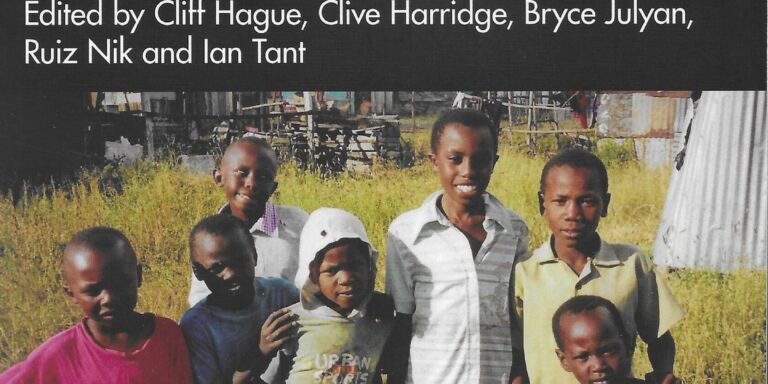
In 2010 the Commonwealth Association of Planners held its first Student Essay competition. The winners were Jeremiah Atho Ongo and George Wesonga Auma. Their essay looked at the skills in Making Planning Work and their application in the undergraduate planning programmes at Makerere and Maseno, and in the planning of the huge Dadaab refugee camp…
The Sri Lankan government recently created a new ministerial post – Minister of Megapolis and Western Province Development. The brief is to oversee the creation of a huge urban area roughly 95 kms long with the capital Colombo at its heart. The $300billion project will involve new development and urban renewal on a scale never…
This blog was first posted on the Planning Resource website on 15 May 2012. Natural disasters continue to claim lives and devastate families, particularly the global South. The poor are most vulnerable as they typically live in the most hazardous locations. However, this social and geographical reality also compounds the problems, because of the gaps…