Impacts of AirBnB regulation in New York
New York has long been a money spinner for AirBnB. In January 2023 there were 38,500 listings. As…



New York has long been a money spinner for AirBnB. In January 2023 there were 38,500 listings. As…
In 2010 the Commonwealth Association of Planners held its first Student Essay competition. The winners were Jeremiah Atho…
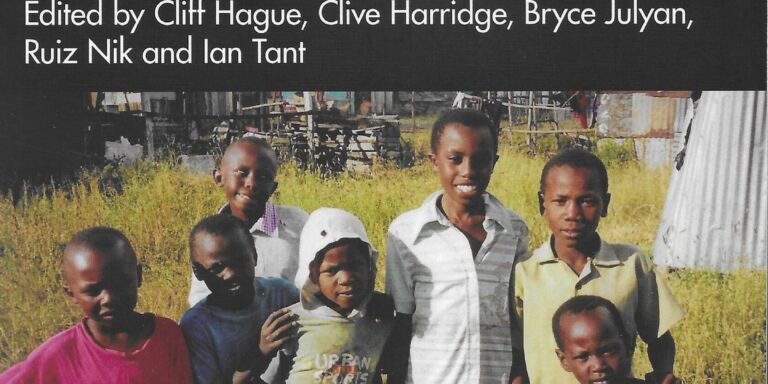
Ken Loach’s film, Kes, was released in 1969. What does it tell us about life in a coalfield…



Cliff is a freelance consultant, researcher, author and trainer. He was the Chair of the Cockburn Association 2016 – 2023.
He is Professor Emeritus of Planning and Spatial Development at Heriot-Watt University in Edinburgh.
He is a Past President of the Royal Town Planning Institute, and of the Commonwealth Association of Planners.
He is a past Chair of Built Environment Forum Scotland.
He was awarded the O.B.E. in the 2016 Birthday Honours.
Tuvalu from the air (photo courtesy of Dr.Julia Edwards) This blog provides a front line report from Tuvalu, a small island state in the Pacific. Tuvalu is going through urbanization on a scale it has never experienced before, and is also struggling to adapt to the impacts of climate change. This remote and tiny place,…
What are the issues that planners across the globe are grappling with? This week I attended a meeting in London of the Commonwealth Association of Planners (CAP). Representatives from Africa, the Caribbean and Americas, Asia, Australasia and the Pacific, and Europe gave fascinating presentations. In the space of an hour we were given a kaleidoscope of planners’…
Recently Professor Cliff Hague from Scotland went to a meeting of a project looking at small and medium-sized towns across Europe,where he spoke in a small town about branding the town. For ICN he reviews his visit and shares his thoughts with us. 2013-12-11 The ESPON project TOWN is looking at small and medium sized towns across…
This blog was first posted on 8 October 2014. A new OECD report, Regions and Cities: Where policies and people meet, makes the point that regional disparities in income are widening. It calls for a place-sensitive approach to policy making, in other words it recognises that policies need to be tuned to specific characteristics of places, rather…
In 2009-13 on average 856 persons were displaced from their homes each year in the occupied West Bank of Palestine, and 499 Palestinian-owned structures were demolished in each year by the Israeli authorities. Now research funded by the UK’s Department for International Development has put a price on the economic damage this does. A report…
Look at your town centre as a network of gardens, a promenade, a stage and be prepared to be outrageous. This was the advice given by Julian Dobson to meeting of the Scottish Towns Partnership in Edinburgh. He stressed the need to challenge the existing narratives about town centres which are too often about decline and narrowly…
The European Parliament has issed a useful briefing note explaining the background to moves to deveop an Urban Agenda for the EU, and also sketching out some of the political tensions that the move is generating. Some 70% of EU citizens live in urban areas. In addition, most EU policies have some impact, direct or…
Informal development is now penetrating the formerly exclusive suburbs of Harare, Zimbabwe’s main city. lLike many colonial cities the early planning of Harare sought to segregate areas by class and ethnicity. However, urbanisation and poverty are now resulting in green spaces in low density suburbs becoming the focus for informal housing that brings the poor…
This article, based on the work of our International Advisory Group to UN-Habitat, appeared in the magazine A Week in Palestine, November 2015, pp.18-22 http://thisweekinpalestine.com/international-experts-call-for-fundamental-changes-in-israels-approach-to-planning-and-development-in-area-c/
This first appeared in Planning on 29 November 2002 and is reproduced by kind permission of Haymarket Publications.