Impacts of AirBnB regulation in New York
New York has long been a money spinner for AirBnB. In January 2023 there were 38,500 listings. As…



New York has long been a money spinner for AirBnB. In January 2023 there were 38,500 listings. As…
In 2010 the Commonwealth Association of Planners held its first Student Essay competition. The winners were Jeremiah Atho…
Ken Loach’s film, Kes, was released in 1969. What does it tell us about life in a coalfield…


Cliff is a freelance consultant, researcher, author and trainer. He was the Chair of the Cockburn Association 2016 – 2023.
He is Professor Emeritus of Planning and Spatial Development at Heriot-Watt University in Edinburgh.
He is a Past President of the Royal Town Planning Institute, and of the Commonwealth Association of Planners.
He is a past Chair of Built Environment Forum Scotland.
He was awarded the O.B.E. in the 2016 Birthday Honours.
Here in UK, and particularly in the North of England, museums and public galleries are being closed down as councils struggle to cope with real reductions in income forced by the UK government’s austerity programme. In USA it is a different story. Many towns and cities created public galleries and museums in the nineteenth century or early…
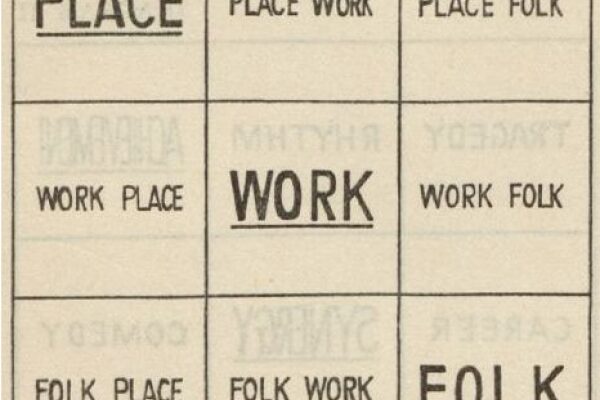
It is doubtful if the Italian film-maker Frederico Fellini knew of the work of the Scottish luminary Patrick Geddes – biologist, ecologist, sociologist, educationalist and planner. Fellini’s films have a strong sense of place, and of the relationship between people and place, which was an important theme for Geddes. I want to explore one of…
Public spaces are integral to healthy and prosperous cities. This was the theme of a major conference last week in the run-up to next year’s Habitat III global summit. Place-making needs to be seen as contributing to the 2015-2030 Sustainable Development Goals. The Future of Places conference in Stockholm was the third and last in a series that has…
This blog was first posted on the Planning Resource website on 21 February 2011. It was great to see the Commonwealth Association of Planners given the President’s Special Award at the RTPI Awards ceremony in London recently. Retiring RTPI President Ann Skippers emphasised the work CAP does in supporting planners across the Commonwealth. She invited the audience to imagine…
“The planning system has a significant role in supporting sustainable economic growth in rural areas.” This statement is from the Scottish Government’s Planning Policy. However, planning decisions in rural Scotland can often be very controversial, as Cliff Hague explains in his new blog post. 2013-02-05 There are a range of development pressures on the Scottish…
Despite the pace of urbanization and the economic importance of cities, many leading politicians in Africa are still focused on rural areas. Reuben Abraham, the head of a leading Indian think tank on urban issues, says that leaders of some developing countries are simply failing to undersand the importance of urbanization. Speaking in Jakarta at a New…
Posted May 6, 2014 by cliffhague Share Will the UN adopt a post-2015 Sustainable Development Goal addressing urbanisation and human settlements? The draft for the new goals will be agreed early in June, before going to the UN General Assembly for what is expected to be formal endorsement. Thus this month is crucial, and planners, other construction professions, urban…
My previous visits to Riga were in the winter. Fading light on gloomy afternoons, sleet and snow chilling the soul, forcing me to seek the refuge of a warm bar or café. Now I am here in vibrant springtime, with a crescent moon in a crimson night sky after a day of warm sun. Suddenly,…