Impacts of AirBnB regulation in New York
New York has long been a money spinner for AirBnB. In January 2023 there were 38,500 listings. As…



New York has long been a money spinner for AirBnB. In January 2023 there were 38,500 listings. As…
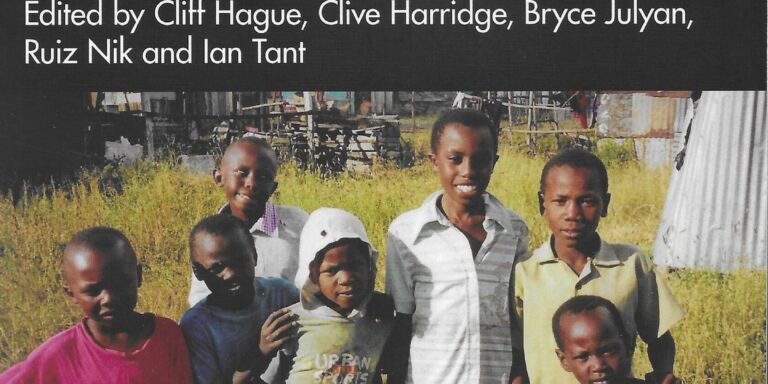
In 2010 the Commonwealth Association of Planners held its first Student Essay competition. The winners were Jeremiah Atho…
Ken Loach’s film, Kes, was released in 1969. What does it tell us about life in a coalfield…



Cliff is a freelance consultant, researcher, author and trainer. He was the Chair of the Cockburn Association 2016 – 2023.
He is Professor Emeritus of Planning and Spatial Development at Heriot-Watt University in Edinburgh.
He is a Past President of the Royal Town Planning Institute, and of the Commonwealth Association of Planners.
He is a past Chair of Built Environment Forum Scotland.
He was awarded the O.B.E. in the 2016 Birthday Honours.
This item was first posted in May 2018. The impacts of austerity in Greece have dropped out of the headlines, but not gone away. In a vivid account of conditions in his adopted city, Belgian planner Frank d’Hondt reviews the fate of Greeks forced to suffer to repay debts to big banks. Greek unemployment remains…
This blog was first posted on the Planning Resource website on 15 May 2012. Natural disasters continue to claim lives and devastate families, particularly the global South. The poor are most vulnerable as they typically live in the most hazardous locations. However, this social and geographical reality also compounds the problems, because of the gaps…
Scotland’s fourth National Planning Framework puts climate and nature centre-stage. The Scottish Government is seeking to “transform planning” by putting the twin crises of climate and nature at the heart of the planning system. National Planning Framework 4 is one of the first national-scale planning documents in the world to confront the urgent challenges of climate…
Public markets add greatly to the vitality of cities and provide essential goods and jobs for many people. They are an integreal part of our urban cultural heritage across all the continents. Yet a number of these markets are now at risk warns a new study. The Sustainable Cities Collective warns of a number of threats…

This item was first posted in November 2019. A major controversy has developed in Edinburgh over a huge development that was allowed to go ahead in the World Heritage Site without planning permission. The London-based event organisers Underbelly have a contract with Edinburgh’s city council who are paying them a reported £800,000 to stage a…
The film Force Majeure focuses on the tensions within a marriage, but it also depicts the tensions between people and the natural environment. The original Swedish title of Ruben Östlund’s internationally acclaimed film Force Majeure is Turist, which is “Tourist”. The pivotal drama in the film is the moment early on when an avalanche of snow threatens to bury the winter…
Posted April 21, 2014 by cliffhagueShare I was in Botswana recently. Planning there is going through a significant transformation. New legislation that came into force in April 2014 will see significant devolution of planning powers to 16 District-level authorities. Twelve of these are rural. As planning goes local the challenge will be to deliver a more…
In the early 1990s Yugoslavia began to disintegrate, triggering a series of vicious wars as ethnic groups contested territories. I have been doing some work looking at current development in the countries of the Western Balkans. Although conditions have certainly improved over the past decade, and the World Bank now rates them as “upper middle…
How can we make the places safer and more secure? I was prompted to ask this by the gang-rape and murder of a young woman in India that was given so much coverage in the news internationally. I did a bit of research on what women’s groups have been doing in India to focus the…
What are the issues that planners across the globe are grappling with? This week I attended a meeting in London of the Commonwealth Association of Planners (CAP). Representatives from Africa, the Caribbean and Americas, Asia, Australasia and the Pacific, and Europe gave fascinating presentations. In the space of an hour we were given a kaleidoscope of planners’…