Impacts of AirBnB regulation in New York
New York has long been a money spinner for AirBnB. In January 2023 there were 38,500 listings. As…



New York has long been a money spinner for AirBnB. In January 2023 there were 38,500 listings. As…
In 2010 the Commonwealth Association of Planners held its first Student Essay competition. The winners were Jeremiah Atho…
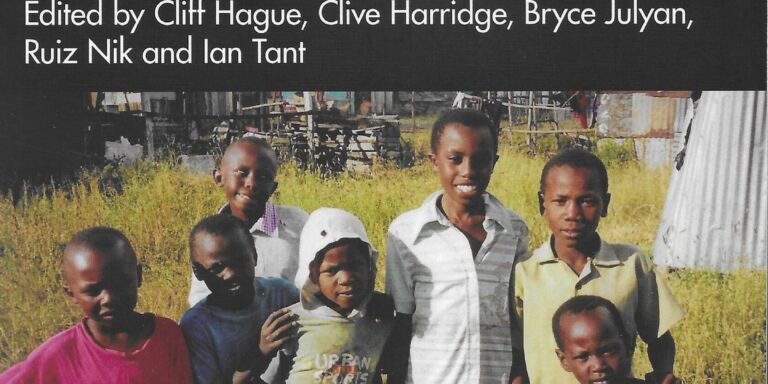
Ken Loach’s film, Kes, was released in 1969. What does it tell us about life in a coalfield…



Cliff is a freelance consultant, researcher, author and trainer. He was the Chair of the Cockburn Association 2016 – 2023.
He is Professor Emeritus of Planning and Spatial Development at Heriot-Watt University in Edinburgh.
He is a Past President of the Royal Town Planning Institute, and of the Commonwealth Association of Planners.
He is a past Chair of Built Environment Forum Scotland.
He was awarded the O.B.E. in the 2016 Birthday Honours.
The brutal murder of Emmanuel Sithole in the Johannesburg township of Alexandra is a frightening sign of the potential for ethnic divisions to destroy social cohesion and economic growth. It undermines the moral leadership that South Africa has been able to exercise since the end of apartheid. It is part of a pattern of Afrophobia…
This blog was first posted on the Planning Resource website on 11 July 2011. A third of the world’s people are on the move, says Billy Cobbett, the Manager of Cities Alliance. Addressing the World Planning Schools Congress in Perth, Western Australia, Mr. Cobbett called for planners to transform the current wave of urbanisation into a sustainable…
Faced with increased urban flooding, China is seeking to create “sponge cities” that can absorb water. China’s rapid urbanisation has been accompanied by increased rates of urban flooding. The number of Chinese cities affected by floods has more than doubled since 2008. While water management was integrated into traditional Chinese urban development, the last 40 years have…

This blog was first posted in February 2015. Young Eyes is a new IC project. It looks to me like it will be a good one. I was at the kick-off meeting in a cold and misty Warsaw in January. All the partners were there – Jelgava and Rauna from Latvia, our Polish friends from…
This blog was first posted in February 2018. South Africa is engaging fully with the New Urban Agenda, and posing some fundamental questions about what it means to be a planner in today’s world. Confession: I only went into one session at the World Urban Forum today. Lest it seems that I was skipping classes,…
This blog was first posted in February 2020. For my blog on the opening day of the 2010 WUF click here. Can we break the glass ceiling dividing community action and government action? On the second day of the 2020 UN-Habitat World Urban Forum, I have sensed a divide between the actions of governments in…
The figure of Hans Clauert is used in public art in the centre of Trebbin to brand the town. How do you make small towns in rural areas more attractive? This is the central concern of a Baltic Sea INTERREG IVB project that I have been working on. Trans-in-Form brought together partners from Norway, Sweden, Germany, Poland,…

The recent decision by Alphabet to scrap its ambitious waterfront regeneration project in Toronto is a landmark in the short history of smart cities. Sidewalk Labs’ Toronto Waterfront project was a flagship for the Smart Cities movement. Early in May 2020 it was abandoned. The germination, contestation and demise of the scheme will be mulled…
This blog was first published on 27 February 2012, on the Innovation Circle network website. Happy New Year – the Chinese Year of the Dragon! Every Chinese New Year 130 million people in the world’s most populous country head back home to their villages for family celebrations. It is the world’s largest human migration and…